
How Much Should a Small Business Website Really Cost in 2026?
If you've started shopping for a small business website, you've probably noticed something frustrating fast: the quotes are all over the place. One company quotes $500. Another quotes $8,000. A freelancer on a marketplace offers to build it for $150. So which number is real? The honest answer is that it depends entirely on what's actually included, and most business owners don't find out what's missing until months later.
# What actually affects website cost
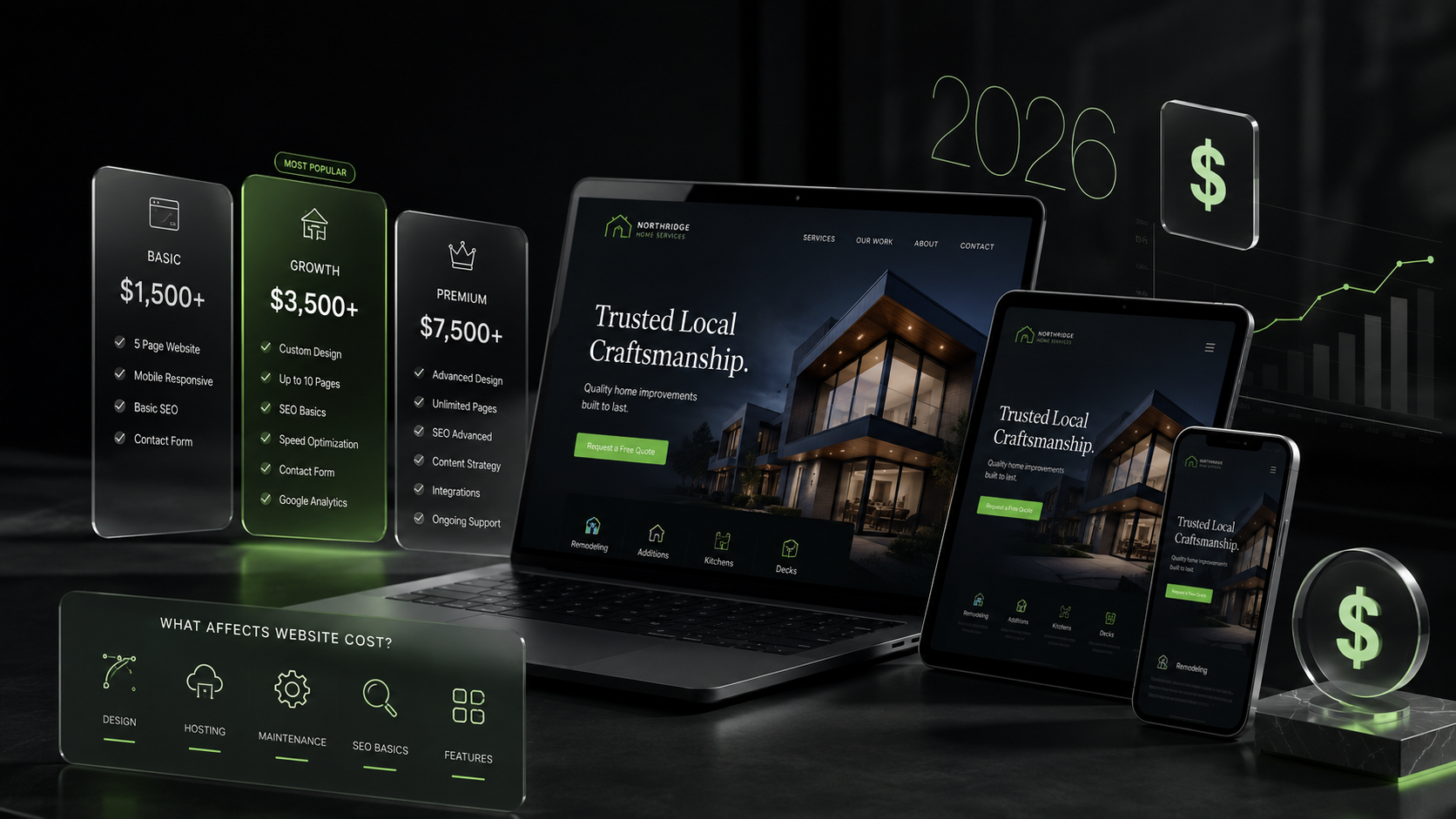
A handful of factors drive most of the price difference between providers: design (custom-built versus a reused template), hosting (whether it's included or billed separately), ongoing maintenance (updates, security, and uptime monitoring), SEO basics (whether the site is actually structured to be found in search), and features (booking forms, e-commerce, integrations, and anything beyond a basic set of pages). The cheapest quote in your inbox usually means one or more of these got left out.
# Typical price ranges you'll see while shopping
These are general ranges you'll commonly run into while comparing providers, not a quote for any specific project, every business's needs are different. A basic package (often starting around $1,500) usually means a small number of pages, a mobile-responsive template, and basic SEO, a solid starting point if your needs are simple. A growth-tier package (often starting around $3,500) typically adds custom design, more pages, stronger SEO fundamentals, speed optimization, and integrations like analytics or a contact form that actually routes leads somewhere useful. A premium package (often starting around $7,500) usually includes advanced design, unlimited pages, a real content and SEO strategy, and ongoing support baked into the price.
# What the cheapest option usually leaves out
A low upfront number can be a great deal, or it can be the first of many surprise bills. Watch for hosting that isn't included and gets billed separately once the site is live, no SEO work at all (meaning the site looks fine but nobody finds it), no ongoing support so every small text change costs extra, generic templates that make your business look like dozens of others in your area, and missing SSL or security monitoring that leaves the site vulnerable.
# One-time price vs. monthly investment: which actually makes sense
Some providers charge one large upfront fee and hand you the keys. Others spread the cost into a smaller monthly investment that bundles hosting, security, and ongoing support into one predictable bill. Neither model is automatically better, but a low one-time price with no ongoing support often costs more over a year once you add up hosting, security patches, and the hourly rate for every edit you need.
# Questions to ask before you sign with anyone
Before committing to a provider, ask: Is hosting included, or billed separately? Who owns the website and the code when the project is done? What happens when you need a content change six months from now, is it included or billed hourly? Is SEO part of the build, or a separate line item? What's the realistic timeline, and what do you need to provide to keep it on schedule? A provider who can answer these clearly, without hedging, is usually the safer choice regardless of which price tier they fall into.
At HighRanx, we build websites on a managed monthly model that bundles hosting, security, and ongoing support into one predictable price instead of a large upfront bill with hidden costs later. If you want to see exactly what's included, our pricing page breaks it down in full.
Ready to see what a real website plan looks like?
See pricing